
If your child is scared of the dentist, you’re far from alone and there’s a lot you can do to help. Dental anxiety is one of the most common worries parents bring to us, and the good news is that with the right preparation, calm reassurance, and a gentle dental team, most children can learn to feel comfortable in the chair. This guide shares the practical, proven strategies we use every day as an Oshawa kids’ dentist to turn nervous first-timers into confident little patients.
The short version Prepare your child with positive language and role-play, stay calm yourself (kids take their cues from you), choose a gentle pediatric-friendly dentist, and reward bravery afterward. Small steps make a big difference and every visit gets easier. |
Why Do Kids Fear the Dentist?
Understanding where the fear comes from is the first step to easing it. Dental anxiety in children is extremely common research suggests that for roughly one in ten children, that anxiety is strong enough to interfere with their dental care. For most kids, the fear usually comes down to a few things:
- Fear of the unknown unfamiliar sights, sounds, and instruments can feel overwhelming to a small child.
- Loss of control lying back in a big chair while someone works in their mouth can feel scary and helpless.
- A past negative experience even an uncomfortable moment at a previous visit can linger.
- Learned anxiety children often absorb worries from parents or siblings who are nervous about the dentist themselves.
- Fear of specific things needles, drills, or simply the fear that it will hurt.
Once you have a sense of what’s driving your child’s fear, it becomes much easier to address it with the right approach.
Start With Yourself: Managing Your Own Anxiety
Here’s something many parents don’t realize: children take their emotional cues directly from you. If you’re tense, use worried tones, or share your own dental horror stories, your child picks up on it instantly and their fear grows. The single most powerful thing you can do is model calm confidence.
- Keep your own tone light, positive, and matter-of-fact when talking about the dentist.
- Never share negative or scary dental stories in front of your child even jokingly.
- If you have dental anxiety yourself, be aware of it and consciously project calm.
- Frame the visit as a normal, healthy routine like getting a haircut not a big scary event.
Parent tip If you’re nervous too, it’s okay to let our team know. When we understand the whole family’s comfort level, we can tailor the visit to put everyone at ease. |
Before the Visit: How to Prepare Your Child
A little preparation in the days beforehand removes the fear of the unknown the biggest source of anxiety. Try these:
- Talk about it positively. Explain the visit in simple, cheerful terms: the dentist counts your teeth, gives them a little shine, and helps keep your smile healthy.
- Read a storybook. Children’s books about visiting the dentist help your child know what to expect and make it feel friendly and familiar.
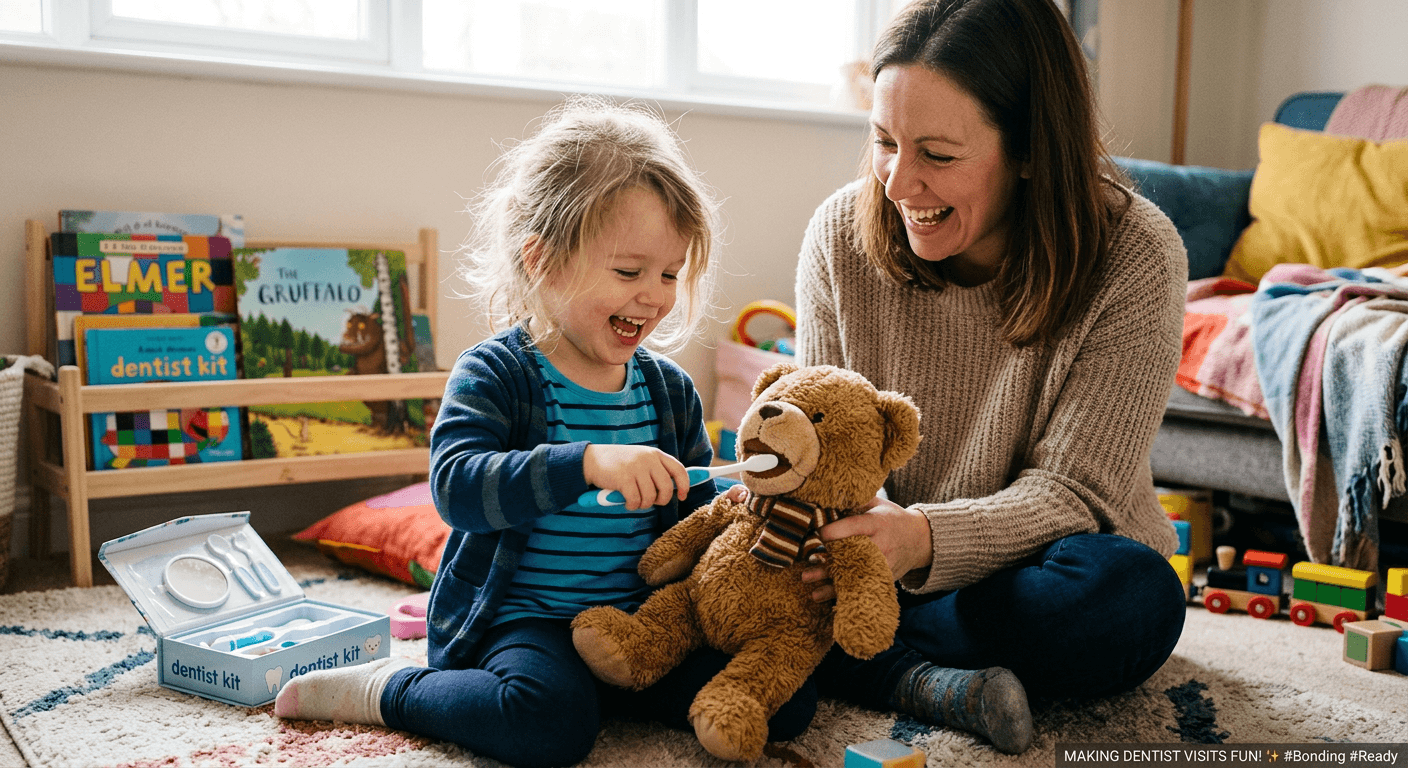
- Role-play at home. Play “dentist” count your child’s teeth with a toothbrush, then let them do the same to a favourite stuffed animal. This turns the unknown into a fun, familiar game.
- Book a “happy visit.” Ask us about a quick, no-treatment visit so your child can see the office, meet the team, and sit in the chair before their real appointment.
- Time it well. Choose an appointment when your child is usually rested and fed never right before a nap or when they’re likely to be hungry.
- Bring comfort. A favourite toy, blanket, or stuffed animal gives your child something familiar to hold on to.
Words to Use and Words to Avoid
The language you use shapes how your child feels before they ever reach the office. Certain words plant fear; friendlier alternatives keep things calm. Here’s a quick guide:
✖ Words to Avoid | ✔ Say This Instead |
|---|---|
Hurt, pain, or “it won’t hurt” | We’ll count and check your teeth |
Needle, shot, or drill | Sleepy juice / the tooth tickler |
Pull or yank the tooth | Wiggle the tooth out |
Be brave / don’t be scared | You’re going to do great |
Cavity, decay, or “bad teeth” | Sugar bugs we’ll clean away |
The goal isn’t to be dishonest it’s to describe the visit in words that feel safe and age-appropriate rather than alarming.
During the Visit: Staying Calm and Supportive
On the day, your calm presence is your child’s greatest comfort. Here’s what helps and what our team does to make it easy:
What you can do
- Stay relaxed and positive your child is watching your face and body language.
- Let your child sit on your lap if they’re little; many young children feel safest in a parent’s arms.
- Avoid over-reassuring (“don’t worry, it won’t hurt!”), which can accidentally signal there’s something to fear.
- Let the dental team lead the conversation with your child they’re trained for exactly this.
What our team does
Dentists who work with children use gentle, proven behaviour-management techniques. The best known is “tell-show-do” we tell your child what we’ll do in kid-friendly words, show them the tool (often on a finger or a stuffed animal first), then do it gently, so there are no surprises. We also use distraction (chatting, counting, ceiling TVs), voice control (a calm, friendly tone throughout), and lots of positive reinforcement praising your child for every small bit of cooperation.
After the Visit: Reinforcing the Positive
What happens after the appointment shapes how your child feels about the next one:
- Praise their bravery celebrate how well they did, regardless of how the visit went.
- Reward the right way a sticker, a small toy, or a fun activity afterward. Avoid promising treats as a bribe beforehand, which can imply the dentist is something to be endured.
- Keep visits regular seeing the dentist every six months builds familiarity, so each visit feels routine rather than rare and scary.
- Talk about it positively afterward reinforce the good parts and how grown-up they were.
Anxiety Tips by Age
Toddlers (1–3 years)
Keep it short and lap-based. Focus on familiarity over instruction the goal is simply a positive, no-pressure introduction. A comfort item and your calm presence matter most.
Preschoolers (3–5 years)
This is the sweet spot for role-play and storybooks. Preschoolers respond wonderfully to imaginative framing “sugar bugs,” “tooth counting,” and being the dentist’s special helper.
School-age (6+ years)
Older children can handle simple, honest explanations and appreciate having some control like choosing which flavour of polish. Answer their questions directly and avoid dismissing their worries.
When Anxiety Is More Than Nerves
For most children, preparation and a gentle dental team are all it takes. But some kids experience dentophobia an intense fear that goes beyond ordinary nerves and can cause real distress. If your child’s anxiety is severe, there are additional options we can discuss:
- Nitrous oxide (laughing gas) a safe, mild sedative that helps an anxious child relax during treatment, wearing off quickly afterward.
- Sedation options for specific situations, always discussed and agreed with you in advance.
- A gradual approach building trust over several short, positive visits rather than rushing treatment.
If your child’s fear seems rooted in a deeper anxiety, we’re always happy to work with you and, when helpful, alongside your family doctor to find the gentlest path forward.
How Our Oshawa Kids’ Dentist Keeps Little Ones Calm
At Oshawa Downtown Dental, conveniently located on Simcoe Street in downtown Oshawa, we genuinely love working with children. Our team takes the time to build trust, using gentle language, a patient and unhurried pace, and all the reassuring techniques above to help even nervous little ones feel safe. We know that a calm, positive experience now sets your child up for a lifetime of healthy, fear-free dental visits and we take that to heart with every young patient.
Preparing for your child’s very first appointment? Our guide to your child’s first dental visit walks you through exactly what to expect. As a kids dentist in Oshawa, we welcome families from across Oshawa, Whitby, Courtice, Ajax, Bowmanville, and the Durham Region and if your child ever has a dental emergency, we’re here to help quickly and gently. New patients are always welcome, and we’re happy to help you understand your coverage, including the CDCP and the Canada Dental Benefit for children.
Ready to help your child feel confident? Let’s make the dentist a place your child doesn’t fear. Book your child’s appointment with Oshawa Downtown Dental today our gentle team would love to welcome your family. |
Frequently Asked Questions
How do I calm my child before a dental visit?
Prepare them a few days ahead with positive, simple language and role-play at home, choose an appointment time when they’re rested and fed, bring a comfort item, and stay calm and upbeat yourself children take their emotional cues from their parents.
Why is my child so scared of the dentist?
Most childhood dental fear comes from the unknown, a feeling of lost control, a past uncomfortable experience, or anxiety picked up from family members. Identifying the specific trigger makes it much easier to ease.
What is the tell-show-do technique?
Tell-show-do is a gentle behaviour-management method where the dentist tells the child what will happen in kid-friendly words, shows them the tool (often on a finger or toy first), then does it gently removing surprises and building trust.
Should I use sedation for my anxious child?
Sedation isn’t usually necessary. Most children respond well to preparation, positive reinforcement, and distraction. For severe anxiety, options like nitrous oxide (laughing gas) can help always discussed and agreed with you in advance.
What words should I avoid saying about the dentist?
Avoid fear-inducing words like hurt, pain, needle, shot, drill, or pull. Use friendly alternatives such as counting teeth, giving your smile a shine, or cleaning away sugar bugs. Also avoid over-reassuring, which can hint there’s something to fear.
At what age should my child first see a dentist?
The Canadian Dental Association recommends a first visit within six months of the first tooth appearing, or by age one. Starting early builds familiarity and helps prevent dental anxiety from developing in the first place.
A calm child starts with the right support. If you’re looking for a gentle, patient kids’ dentist in Oshawa who knows how to put anxious little ones at ease, Oshawa Downtown Dental is here to help. Contact us today to book your child’s visit and start building a lifetime of confident, healthy smiles.