
Your child’s dental care should begin before their first birthday and what matters most changes at every stage as they grow. From wiping a baby’s gums to protecting a nine-year-old’s new molars, knowing what to expect (and what to do) at each age makes it far easier to keep your child’s smile healthy. This age-by-age guide walks Oshawa parents through every dental milestone from the first tooth to the teen years.
The quick answer Start cleaning your baby’s gums before teeth even appear, book the first dental visit by age one, then keep up checkups every six months. Fluoride and sealants at the right ages do the most to prevent cavities and good habits started early rarely need undoing later. |
Why Starting Early Matters So Much
Tooth decay is the most common chronic disease of childhood and it moves quickly through thin baby enamel. That’s why the Canadian Dental Association recommends a child’s first dental visit within six months of the first tooth appearing, and no later than their first birthday.
Early visits do three things at once: they catch decay before it becomes painful or costly, they teach you exactly how to care for your child’s teeth at each stage, and they help your child feel comfortable at the dentist from the very beginning. Baby teeth also guide permanent teeth into position, so keeping them healthy has effects that last well into adulthood. If you’re preparing for that very first appointment, our guide to your child’s first dental visit walks you through exactly what to expect.
The Complete Dental Milestone Timeline
Here’s the full picture at a glance what’s happening in your child’s mouth at each age, and what you should be doing about it. Detailed guidance for each stage follows below.
Age | What’s Happening | What Parents Should Do |
|---|---|---|
0–6 months | No teeth yet; gums only | Wipe gums with a soft, damp cloth after feeding |
6–12 months | First tooth erupts (usually lower front) | Start brushing with a soft infant brush; book the first dental visit |
By age 1 | Several baby teeth in | First dental visit no later than the first birthday |
1–3 years | Teeth keep erupting; 20 baby teeth by age 3 | Brush twice daily; floss when two teeth touch; monitor thumb sucking |
3–6 years | Full set of baby teeth; habits forming | Pea-sized fluoride toothpaste; supervise brushing; regular checkups |
6–9 years | First permanent molars arrive; front baby teeth fall out | Ask about sealants; mouthguard for sports; reinforce good brushing |
Age 7 | Bite and jaw development visible | Orthodontic assessment to catch alignment issues early |
9–12 years | Remaining baby teeth lost; 12-year molars arrive | Sealants on new molars; independent brushing and flossing |
Teens | Full permanent set; wisdom teeth 17–21 | Monitor wisdom teeth; continue 6-month visits; whitening if desired |
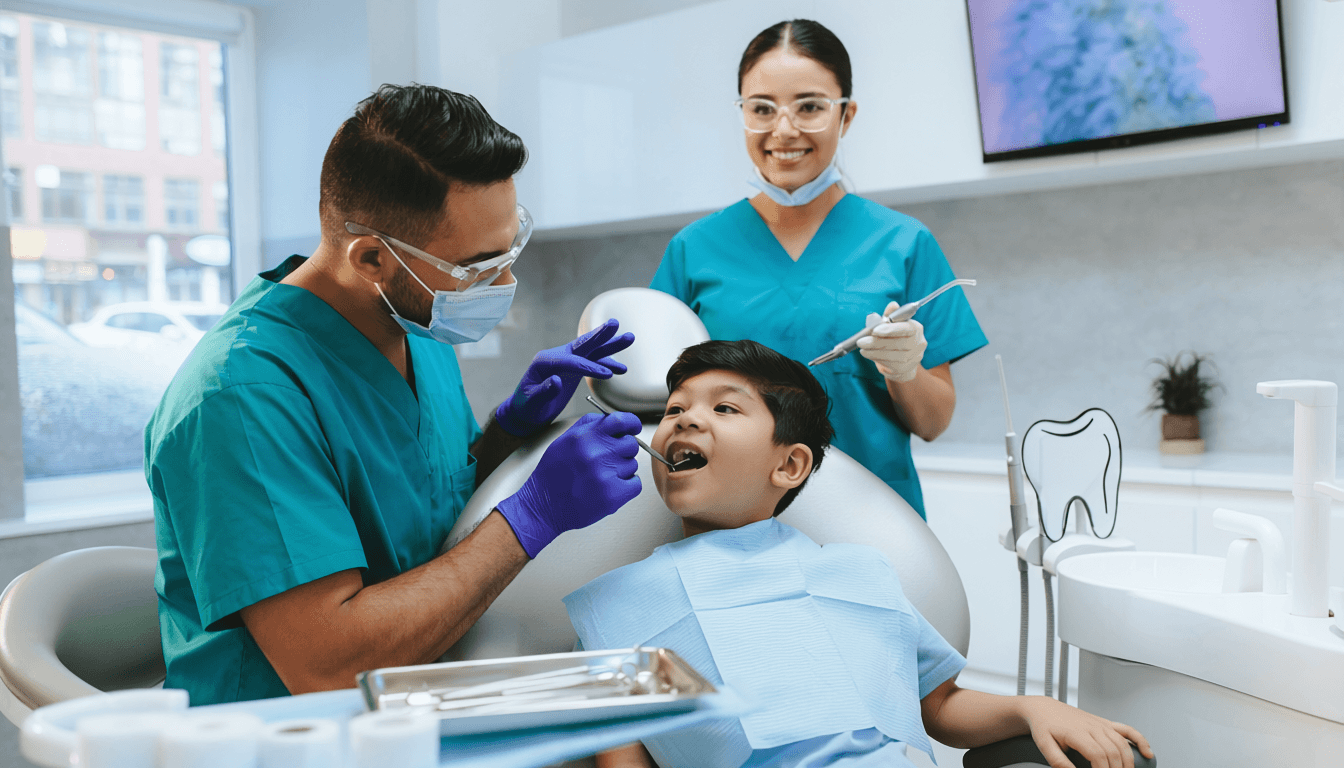
Age-by-Age: What Matters Most at Each Stage
Birth to 12 Months: Before and After the First Tooth
Dental care starts before teeth do. Even with bare gums, wipe your baby’s gums with a soft, damp cloth after feeding to clear away bacteria and start the habit early.
The first tooth usually appears between six and twelve months, most often the lower front teeth (central incisors). Once it arrives, switch to a soft infant toothbrush and a smear of fluoride toothpaste. Teething discomfort is normal at this stage a chilled teething ring or gentle gum massage helps. And this is when you book that first dental visit.
Ages 1–3: Building the Routine
Teeth keep arriving through the toddler years, and by age three your child should have a full set of 20 baby teeth. Key priorities now:
- Brush twice a day, morning and night you’re still doing the brushing at this age
- Start flossing as soon as any two teeth touch
- Avoid putting your child to bed with a bottle of milk or juice, a leading cause of early decay
- Monitor thumb sucking and pacifier use prolonged habits can affect tooth alignment
- Keep up dental visits every six months
Ages 3–6: Independence and Prevention
With a full set of baby teeth, this stage is about building good habits and preventing cavities. Move to a pea-sized amount of fluoride toothpaste and teach your child to spit rather than swallow. They’ll want to brush themselves let them try, then follow up yourself, since most children need help until around age seven or eight.
Preschool is also when dental anxiety can take hold if visits feel scary. If your child is nervous, our guide to easing your child’s dental anxiety has practical strategies that really work at this age.
Ages 6–9: The Mixed Dentition Years
This is one of the most important stages. Around age six, the first permanent molars arrive at the back often without any baby tooth falling out first, so parents sometimes miss them entirely. At the same time, baby teeth start to loosen; most children lose their front eight teeth (four top, four bottom) by around age eight.
Three priorities at this stage:
- Dental sealants on those new permanent molars the single most effective cavity-prevention step (more below)
- A mouthguard if your child plays sports, to protect against knocked-out and broken teeth
- Reinforced brushing new molars sit right at the back and are easy to miss
Age 7: The Orthodontic Checkpoint
Around age seven, enough permanent teeth and jaw growth are visible for a dentist to assess how the bite is developing. This early assessment can catch crowding, spacing, or alignment issues while they’re still simple to guide often saving time, complexity, and cost later. It doesn’t mean braces now; it simply means knowing what’s ahead.
Ages 9–12: Finishing the Permanent Set
The remaining baby teeth come out and the 12-year molars arrive at the very back. Those new molars deserve sealants too. By now your child should be brushing and flossing independently but a quick check from you still helps, especially around the back teeth and along the gumline.
The Teen Years: Protecting the Adult Smile
With a full permanent set in place, the focus shifts to protection and monitoring. Wisdom teeth typically appear between 17 and 21 not everyone needs them removed, but regular checkups let your dentist track whether they have room to come in properly. Teens are also at higher risk from sugary drinks and sports injuries, and many become interested in the appearance of their smile, so this is often when conversations about alignment or whitening begin.

What Matters Most: Fluoride and Sealants
If you do only two preventive things beyond brushing, make them these. Both are quick, painless, and dramatically reduce your child’s cavity risk.
Fluoride varnish
A quick application of fluoride varnish strengthens developing enamel and helps it resist decay. It takes moments, is applied right at a routine visit, and is one of the simplest protections available for young teeth.
Dental sealants
Sealants are thin protective coatings painted into the deep grooves of the back molars exactly where the overwhelming majority of childhood cavities begin. The evidence is striking: sealants prevent roughly 80% of cavities in back teeth in the first two years, and children aged 6 to 11 without sealants get nearly three times as many first-molar cavities. They also cost about a third of what a filling costs making them one of the best investments in your child’s long-term dental health, and a good example of how preventive care keeps dental costs down.
🦻 Everyday habits that matter just as much
|
Caring for Young Smiles in Downtown Oshawa
At Oshawa Downtown Dental, conveniently located on Simcoe Street in downtown Oshawa, we care for children at every stage from a baby’s very first visit through the teen years. Our gentle, patient team knows how to make young patients feel safe and comfortable, and we take the time to show parents exactly what to do at home as their child grows.
As a children’s dentist in Oshawa, we focus on prevention fluoride, sealants, and honest guidance so your child avoids painful and costly problems down the road. We welcome families from across Oshawa, Whitby, Courtice, Ajax, Bowmanville, and the Durham Region, and we’re happy to help you understand your coverage, including the Canada Dental Care Plan (CDCP) and the Canada Dental Benefit for children. If your child ever has a dental emergency a knocked-out tooth from a fall or sports we’re here to help quickly.
😁 Whatever stage your child is at, we’re here to help Whether it’s a first tooth or a teenager’s checkup, book your child’s appointment with Oshawa Downtown Dental today and give their smile the best possible start. |
Frequently Asked Questions
When should my child start seeing a dentist?
The Canadian Dental Association recommends a first dental visit within six months of the first tooth appearing, and no later than your child’s first birthday. After that, most children should see a dentist every six months.
When do baby teeth come in and fall out?
The first tooth usually appears between six and twelve months, and children typically have all 20 baby teeth by age three. Baby teeth begin falling out around age six, with most children losing their front eight teeth by about age eight. The final baby teeth are usually gone by around age twelve.
What age should my child get dental sealants?
Sealants are usually applied when the first permanent molars arrive, around age six, and again when the 12-year molars come in. They’re painted into the grooves of the back teeth where most childhood cavities start, and prevent around 80% of cavities in those teeth in the first two years.
When should my child see an orthodontist?
An orthodontic assessment around age seven is recommended. At that age enough permanent teeth and jaw development are visible to spot crowding or bite issues early which often makes future treatment simpler. It doesn’t mean braces right away.
How much fluoride toothpaste should my child use?
Use a small smear for babies and toddlers with their first teeth, moving to a pea-sized amount around age three. Teach your child to spit rather than swallow, and supervise brushing until roughly age seven or eight.
When do wisdom teeth come in?
Wisdom teeth typically appear between ages 17 and 21. Not every teen needs them removed regular checkups let your dentist monitor whether there’s enough room for them to come in properly.
Healthy smiles are built one stage at a time. If you’re looking for a gentle children’s dentist in Oshawa who can guide your family through every dental milestone, Oshawa Downtown Dental is here to help. Contact us today to book your child’s visit whatever age they’re at.