
If you have tooth pain that won’t go away, sensitivity that lingers long after a hot or cold drink, or a tooth that’s turning darker, you may need a root canal and the sooner it’s treated, the simpler it usually is. Root canals have an unfairly scary reputation. In reality, the procedure relieves pain rather than causing it, and it saves a tooth that would otherwise be lost. This guide explains the warning signs to watch for, what actually happens during treatment, and when to see a dentist in Oshawa.
⚠ In severe pain or have facial swelling? Don’t wait for an appointment weeks away. Severe toothache, a swollen face, or a pimple-like bump on the gum can signal an infection that needs urgent care. Call an emergency dentist in Oshawa for same-day treatment. |
What Is a Root Canal and Why Would You Need One?
Inside every tooth is a soft tissue called the pulp, which contains the nerves and blood vessels. When that pulp becomes inflamed or infected usually from deep decay, a crack, repeated dental work, or an injury to the tooth it can’t heal on its own. Left alone, the infection spreads and the pain typically gets worse.
A root canal (also called endodontic treatment) removes that damaged pulp, cleans and disinfects the inside of the tooth, then seals it. The tooth stays exactly where it is, and in most cases a crown is placed afterward to protect it. The whole point of the procedure is to end the pain and save your natural tooth which is almost always better than losing it.
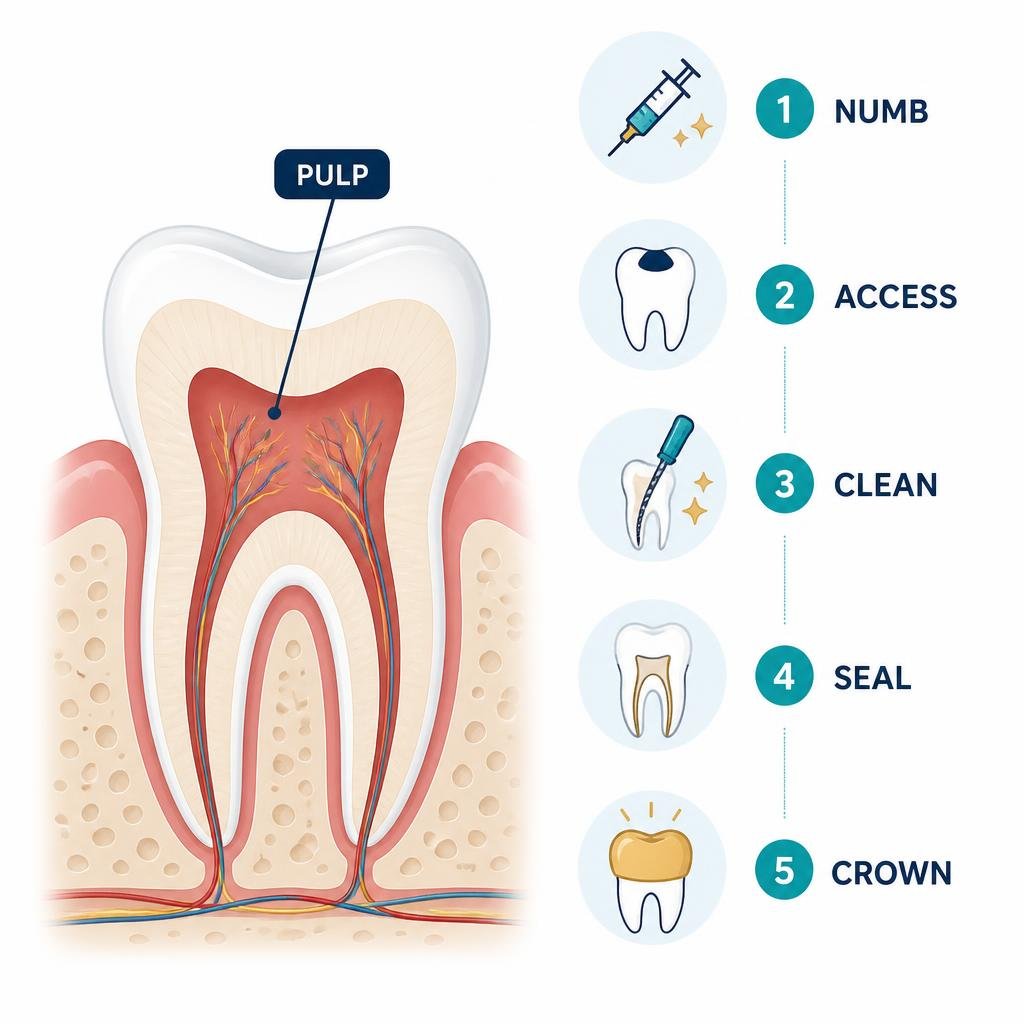
Warning Signs You May Need a Root Canal
Only a dentist can confirm whether you need a root canal, usually with an exam and an X-ray. But these are the signs that most often point to it and they’re worth acting on early.
1. Persistent Tooth Pain
Ongoing pain deep in a tooth is the most common sign. It may be sharp, dull, or throbbing, and it may come and go rather than staying constant. The key detail: pain from an inflamed pulp usually doesn’t settle on its own, and over-the-counter painkillers only mask it temporarily. Pain that wakes you at night is a particularly strong signal.
2. Lingering Sensitivity to Hot or Cold
Brief sensitivity to ice cream or hot coffee is common and usually harmless. What matters is how long it lasts. If the discomfort lingers for more than a few seconds after the hot or cold is gone or turns into a deep ache that suggests the nerve inside the tooth is inflamed or damaged. Sensitivity that keeps getting worse over weeks is a clear red flag.
3. Pain When Biting or Applying Pressure
If one specific tooth hurts when you chew, bite down, or even tap it, the tissue around the root may be inflamed or infected. This kind of localized pressure pain often points to a problem deeper than a simple cavity something a filling alone won’t fix.
4. Swollen or Tender Gums
Swelling, tenderness, or puffiness in the gum near a painful tooth can indicate infection spreading from the root. The swelling may come and go, and the area may feel sore to touch.
5. A Pimple-Like Bump on the Gum
A small bump on the gum near a tooth (sometimes called a fistula) is a drainage point for an abscess a pocket of infection at the root. It may ooze pus, leave a bad taste in your mouth, or disappear and return. This is never something to ignore, even if it isn’t painful.
6. Tooth Discolouration
A single tooth turning grey, brown, or noticeably darker than those around it can mean the nerve inside has died from poor blood supply. This is different from surface staining caused by coffee, tea, or smoking that affects teeth generally, while nerve-related discolouration usually affects just one tooth.
7. A Cracked or Chipped Tooth
A crack or chip from an injury, a fall, or biting something hard can expose the pulp to bacteria. Even a small crack can allow infection to reach the nerve, so it’s worth having any damaged tooth checked promptly.
8. Pain That Continues After a Filling
If a tooth still aches more than a week or two after being filled, the decay may have gone deeper than first thought. Sharp or throbbing pain after a recent filling is a common sign that the pulp is involved.
The Signs That Show Up Before It Hurts
Here’s what many people don’t realize: you don’t have to be in agony to need a root canal. Some of the earliest indicators are easy to dismiss:
- Sensitivity that lingers a little longer than it used to
- A tooth that looks slightly darker than its neighbours
- Mild tenderness in the gum near one particular tooth
- A vague, hard-to-place ache that keeps returning
In some cases there are no symptoms at all, and a problem is only spotted on a routine X-ray which is one more reason regular checkups matter. Catching a tooth at this stage usually means simpler treatment and a better outcome.
What Actually Happens During a Root Canal
This is where the fear usually comes from so here’s exactly what to expect. Modern root canal treatment is straightforward, and most patients say it feels much like having a routine filling.
- Numbing. The area is thoroughly frozen with local anaesthetic, so you shouldn’t feel pain during the procedure.
- Accessing the tooth. A small opening is made in the top of the tooth to reach the pulp chamber.
- Cleaning. The infected or inflamed pulp is removed, and the inside of the tooth is cleaned and disinfected.
- Sealing. The space is filled and sealed to prevent bacteria getting back in.
- Restoring. A crown or permanent filling is placed often at a follow-up visit to protect the tooth and restore normal chewing.
💡 Does a root canal hurt? The pain people associate with root canals is really the pain of the infection that made one necessary. The treatment is what relieves it. With modern anaesthetic and techniques, the procedure itself is typically comfortable, and mild tenderness for a few days afterward is normal and manageable with over-the-counter pain relief. |
What Happens If You Wait
Delaying treatment rarely ends well, because an infected pulp doesn’t recover on its own. Over time:
- The pain usually worsens and can become severe enough to disrupt sleep and daily life.
- An abscess can form at the root, causing swelling and significant discomfort.
- The infection can spread to nearby teeth, the jawbone, or surrounding tissue and in serious cases into the bloodstream, affecting your general health.
- The tooth may no longer be savable, turning a routine root canal into an extraction plus the cost of replacing the tooth.
Acting early almost always means less treatment, less discomfort, and less expense.

Root Canal or Extraction: Which Is Better?
When a tooth is badly infected, there are usually two options: treat it, or remove it. Dentists generally recommend saving the natural tooth whenever it’s realistic nothing functions quite like your own tooth. Here’s how the two compare:
Root Canal | Extraction | |
|---|---|---|
Your tooth | Saved and kept in place | Removed permanently |
Chewing & bite | Function stays natural | Nearby teeth may shift over time |
Follow-up needed | Usually a crown to protect the tooth | Implant or bridge to fill the gap |
Long-term cost | Often lower overall | Replacement costs add up |
Appointments | Typically one or two visits | Extraction plus later replacement |
Extraction is sometimes genuinely the better choice if a tooth is cracked below the gumline or too damaged to restore. In those cases, replacement options such as dental implants can restore both function and appearance. Your dentist will talk you through what makes sense for your specific tooth.
Root Canal Treatment in Downtown Oshawa
At Oshawa Downtown Dental, conveniently located on Simcoe Street in downtown Oshawa, we provide gentle, modern root canal treatment designed around your comfort. If you’re in pain, our first priority is relieving it then we’ll explain clearly what’s going on, show you what we’re seeing, and walk you through your options with no pressure.
We know tooth pain doesn’t wait, so we keep room for urgent cases. If your symptoms are severe, read our guide on what to do in a dental emergency and call us right away. As a trusted root canal dentist in Oshawa, we welcome patients from across Oshawa, Whitby, Courtice, Ajax, Bowmanville, and the Durham Region and we’ll always give you a clear estimate before treatment begins, along with help understanding your coverage, including the Canadian Dental Care Plan (CDCP).
What to expect with us
|
Think you might need a root canal? Book an appointment with Oshawa Downtown Dental today the sooner we look, the more options you’ll have.
Frequently Asked Questions
What are the signs you need a root canal?
The most common signs are persistent tooth pain, sensitivity to hot or cold that lingers after the temperature is gone, pain when biting or chewing, swollen or tender gums, a pimple-like bump on the gum, a single tooth turning darker, a cracked tooth, or pain that continues after a filling. Only a dentist can confirm with an exam and X-ray.
Is a root canal painful?
Not usually. The pain people associate with root canals is really the infection that made the treatment necessary the procedure is what relieves it. With modern anaesthetic, most patients say it feels similar to getting a filling. Mild tenderness for a few days afterward is normal.
Can a tooth heal without a root canal?
No. Once the pulp inside a tooth is infected or badly inflamed, it can’t heal on its own. Pain may temporarily ease if the nerve dies, but the infection remains and will continue to spread. Treatment is the only way to resolve it.
How long does a root canal take?
Most root canals are completed in one or two appointments, typically lasting about an hour to ninety minutes each depending on the tooth. Molars have more canals and can take longer. A follow-up visit is often needed to place a crown.
What happens if I don’t get a root canal?
The infection will progress. Pain usually worsens, an abscess can form, and the infection can spread to nearby teeth, the jawbone, or the bloodstream. Eventually the tooth may not be savable, meaning extraction plus the cost of replacing it so early treatment is almost always simpler and less expensive.
Is it better to get a root canal or have the tooth pulled?
Saving your natural tooth is usually the better option when it’s realistic. A root canal keeps your tooth and your natural bite, while extraction leaves a gap that can cause neighbouring teeth to shift and typically requires an implant or bridge later. Extraction may be the right call if a tooth is too damaged to restore.
Don’t wait for tooth pain to get worse. If you recognize any of these warning signs, an examination now could save your tooth and spare you a lot of discomfort. Contact Oshawa Downtown Dental today we’ll get you out of pain and explain exactly what your tooth needs.